About this song
 Spotify
 YouTube
About "Tornets Hunger"
"Tornets Hunger" is a dark historical ballad inspired by one of the most dramatic power struggles in medieval Sweden - the events surrounding the Håtuna Game of 1306 and the infamous Nyköping Banquet of 1317.
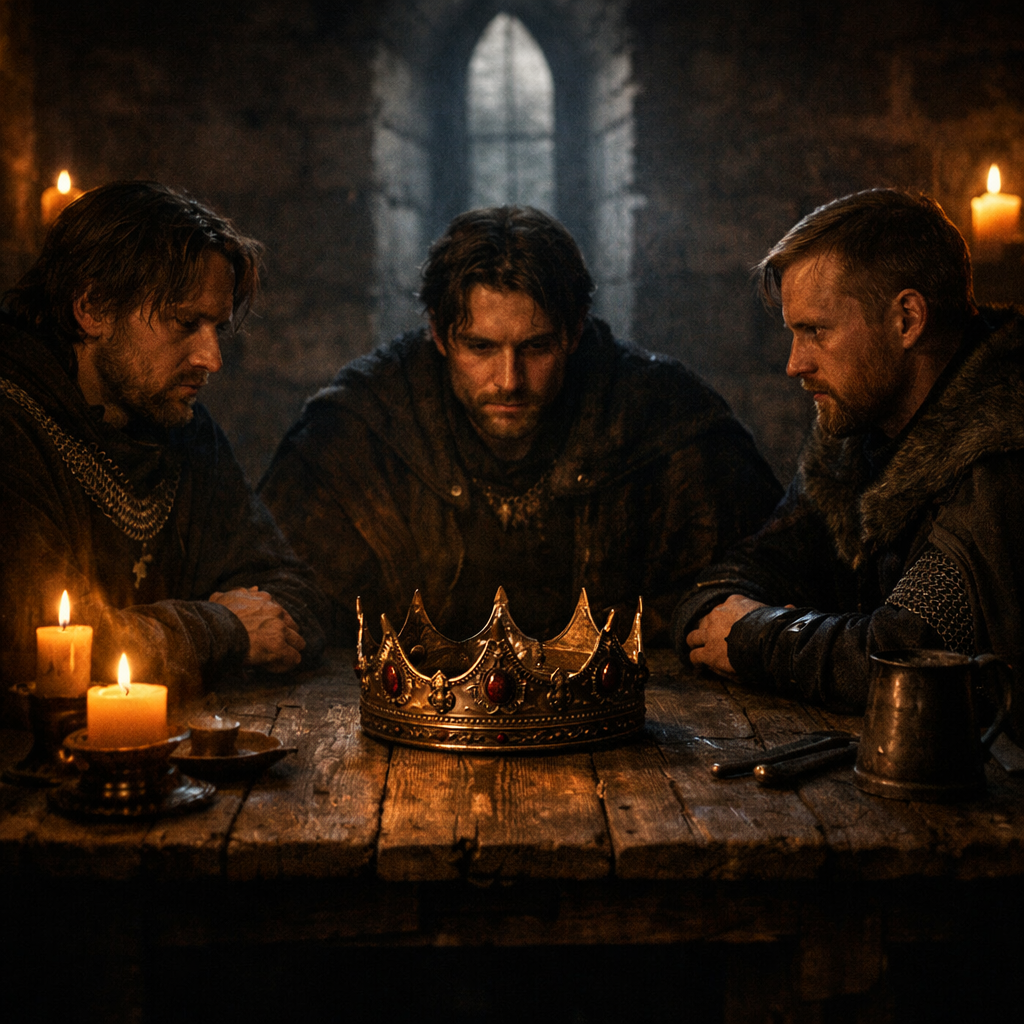
The song tells the story of King Birger Magnusson and his two brothers, Erik and Valdemar. In 1306, Birger was invited to a feast at Håtuna, only to be betrayed and taken prisoner by his own brothers. He was held captive for nearly two years, stripped of power while they ruled in his place.
Years later, Birger returned the betrayal. In 1317, he invited his brothers to a feast at Nyköping. During the night, he had them seized and locked inside a tower. According to historical sources, they were left to starve to death - a slow and merciless revenge.
But the story does not end in victory. Birger's revenge ultimately led to his downfall. He lost the support of the nobility, was forced into exile, and died far from the kingdom he fought to keep.
"Tornets Hunger" focuses not on heroism, but on the human cost of power. The hunger in the song is both literal and symbolic - the hunger for survival, for revenge, and for the crown itself. In the end, that hunger consumes everyone.
The song was written as an intimate inner monologue from Birger's perspective. The intention was to capture the psychological transformation of a man shaped by betrayal - from a betrayed brother to a ruler driven by cold, calculated revenge, and finally to a fallen king left with nothing.
Musically, the track was built around contrast: restrained, almost whispered verses to reflect isolation and confinement, followed by explosive, rhythmic choruses representing the release of anger and inevitability of fate. Nordic folk elements, particularly violin and acoustic textures, were used to create a cold, medieval atmosphere, while heavier instrumentation reinforces the weight of the story.
At its core, "Tornets Hunger" is not a story of victory. It is a tragedy - a reminder that power gained through betrayal often leaves nothing behind.
And in the end, the crown feeds no one.