About this song
 Spotify
 YouTube
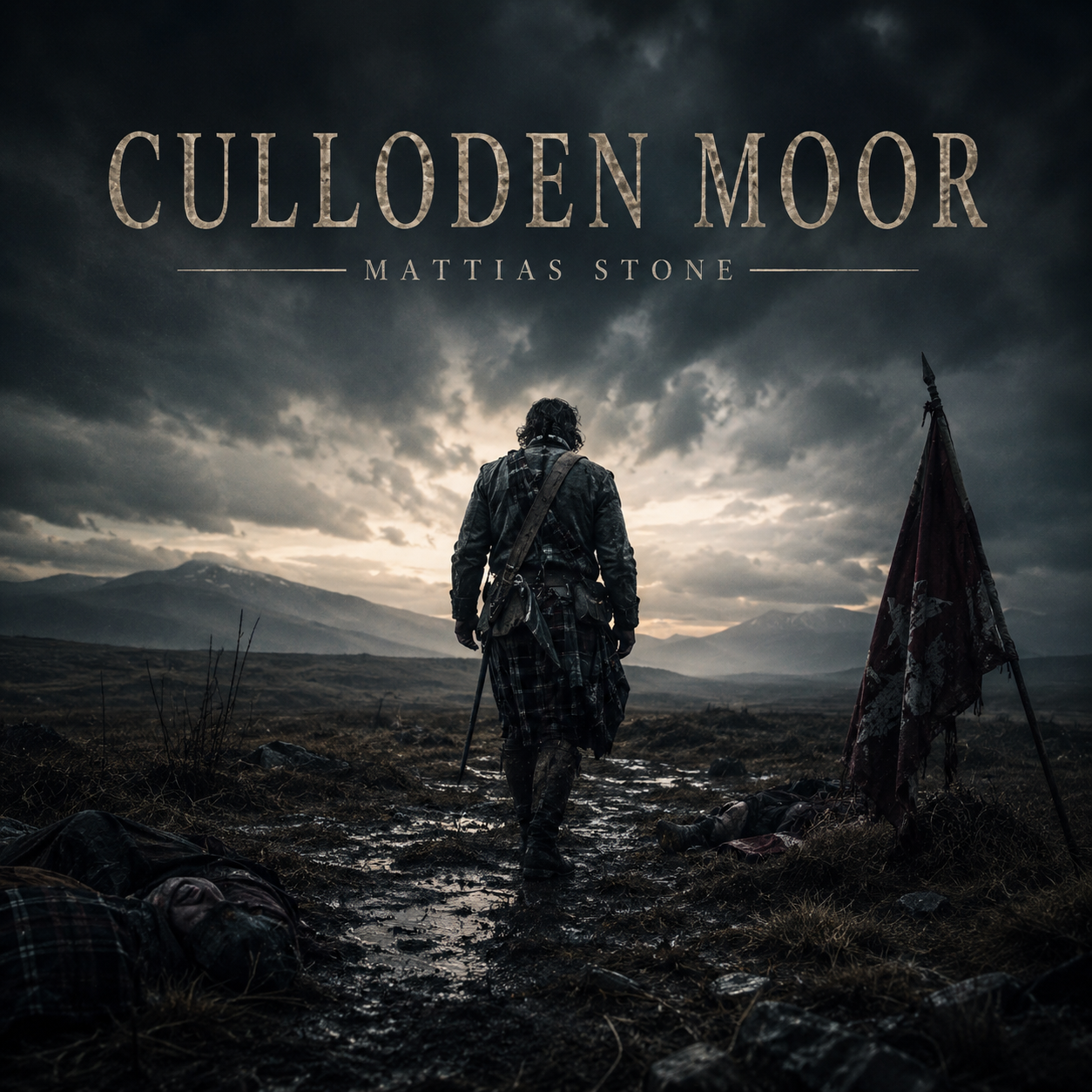
"Culloden Moor" is a song about memory - and the kind you can never outrun.
Set against the backdrop of the Battle of Culloden, the track doesn't try to retell history in the traditional sense. Instead, it narrows everything down to one moment, one voice, and one loss. The story is told through the eyes of a young Highland soldier who survives the battle, while his brother does not.
On April 16, 1746, the Jacobite army led by Charles Edward Stuart was decisively defeated by British government forces. The battle itself lasted less than an hour, but its consequences reshaped the Highlands forever. What followed was not just military defeat, but the dismantling of a way of life - the suppression of clan culture, language, and identity.
But "Culloden Moor" is not about politics or strategy.
It is about what happens after the noise fades.
The song was written from a simple question:
What does it feel like to walk away when someone you love doesn't?
Rather than focusing on the scale of the battle, the writing process stripped everything down to something more human. The lyrics center on small, intimate details - a brother's voice, a glance that doesn't quite meet the eye, the moment of impact, and the silence that follows. The battlefield becomes less important than the emotional aftermath.
Musically, the intention was to avoid turning the song into a traditional historical ballad. Instead, it was built around movement - a sense of forward motion that contrasts with the weight of the story. The arrangement is meant to carry the listener through the memory rather than let them sit still inside it.
There is no victory in this song.
No heroic ending.
No resolution.
Only the quiet burden of surviving.
"Culloden Moor" is, at its core, a story about grief, brotherhood, and the kind of loss that doesn't end when the battle does. It's about the names that never make it into history books - and the ones who are left to remember them.