About this song
 Spotify
 YouTube
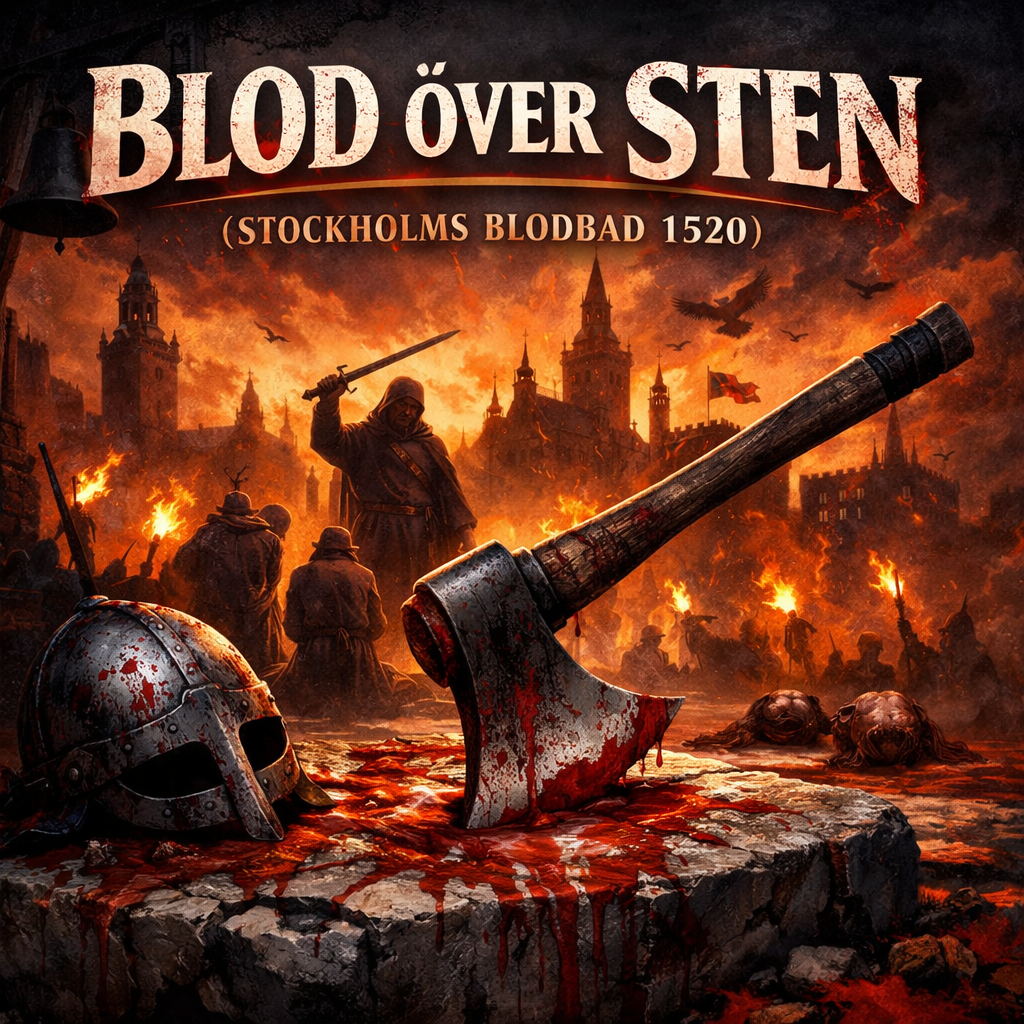
"Blod över sten" is inspired by the Stockholms blodbad - one of the most pivotal and brutal events in Swedish history.
In November 1520, shortly after Christian II was crowned King of Sweden, nobles, bishops, and citizens gathered in Stockholm under promises of amnesty. The city celebrated for days. But what began as ceremony ended in betrayal.
By invoking charges of heresy - supported by Archbishop Gustav Trolle - the king was able to bypass earlier promises and legally justify the execution of his political opponents. Over several days, Stockholm's central square was turned into a place of death. Around 80 to 100 people were executed.
The event later became known as the "Stockholm Bloodbath" - a name shaped as much by history as by narrative and propaganda. Regardless of interpretation, its impact was undeniable: fear, anger, and the spark of resistance.
From that darkness, a movement would rise - one that eventually led to Gustav Vasa and the birth of an independent Sweden.
How the song was written
"Blod över sten" didn't begin with facts - it began with an image.
A cold square.
Church bells echoing.
People waiting for their fate.
The goal was not to write a history lesson, but to capture a moment - the feeling of betrayal, power, and the silence before everything changes.
The lyrics are built on contrasts:
promise vs reality
law vs justice
power vs morality
The chorus - "Blod över sten" (Blood over stone) - was written to feel like an echo from the square. Something collective. Something that refuses to fade.
Musically, the song follows the same intention:
a dark, Nordic atmosphere with enough drive to carry the story forward.
A story - not a verdict
"Blod över sten" doesn't attempt to judge what was right or wrong by the standards of the 16th century.
Instead, it asks:
What happens when power, fear, and justice collide?
And perhaps more importantly:
Who gets to tell the story - and how does that shape what we remember?