About this song
 Spotify
 YouTube
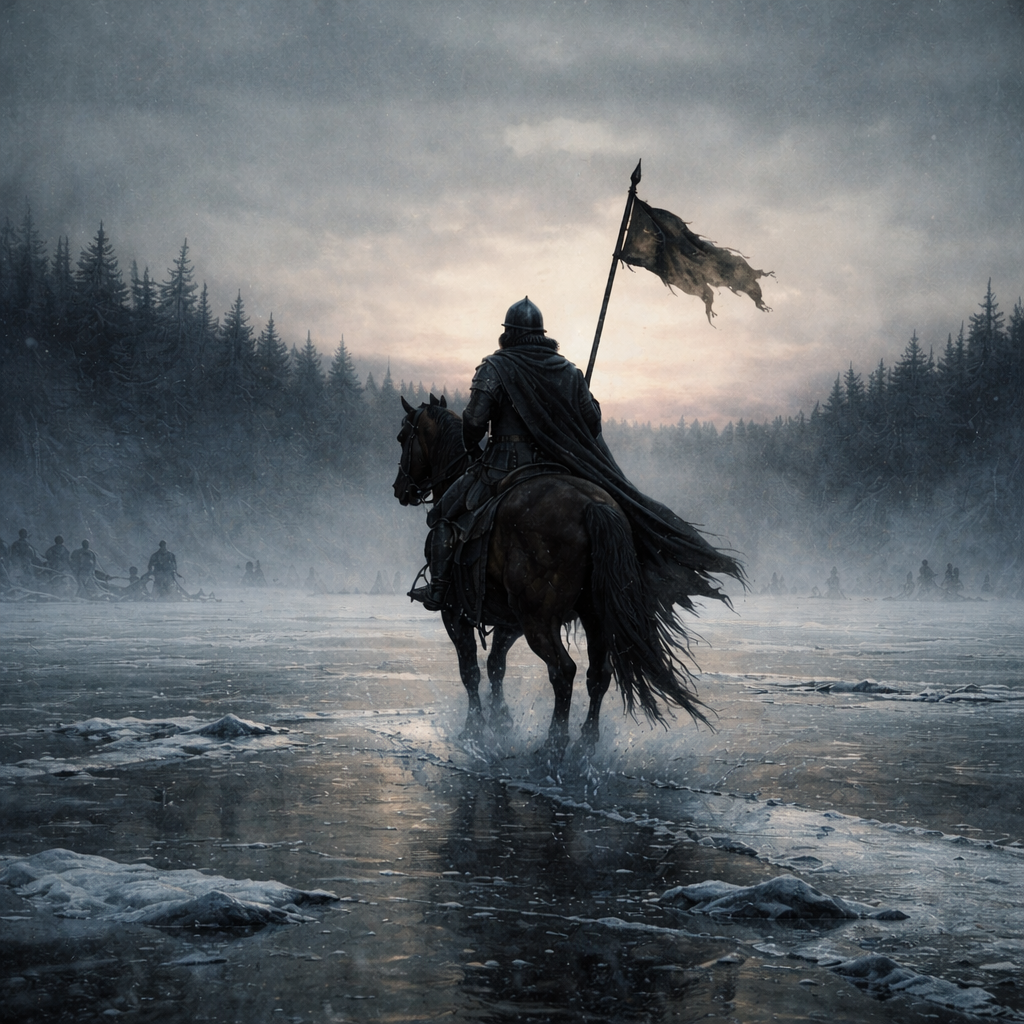
"Mot Isen" is rooted in one of the most decisive and tragic moments in Swedish history. In January 1520, Sten Sture the Younger rode out onto the frozen waters near Bogesund to confront the invading forces of Christian II of Denmark. Outnumbered and outgunned, he chose to fight anyway. During the battle, he was struck by artillery and carried away across the ice, dying from his wounds weeks later. His fall marked the beginning of a chain of events that would lead to the Stockholm Bloodbath later that same year.
The song does not aim to retell the event as a victory, but to capture the exact moment before everything breaks - the fear, the weight of responsibility, and the conscious decision to ride forward despite knowing the odds. It focuses on the human side of leadership: not certainty, but choice.
Musically, "Mot Isen" blends Nordic folk textures with a driving rock foundation. Acoustic instruments and fiddle create a cold, historical atmosphere, while stomping percussion and a rising vocal intensity push the song forward with urgency. The vocal performance is intentionally kept on the edge - restrained in the verses, then opening into a strained, almost breaking expression in the chorus - mirroring the emotional state of someone riding toward a fate they cannot escape.
The song was written with a strong emphasis on contrast: intimacy versus scale, fear versus defiance, silence versus impact. Rather than building constant intensity, it begins in isolation and grows into something larger, reflecting how a single decision can echo through history.
"Mot Isen" is not a song about triumph. It is about the moment where fear is present - and action follows anyway.