About this song
 Spotify
 YouTube
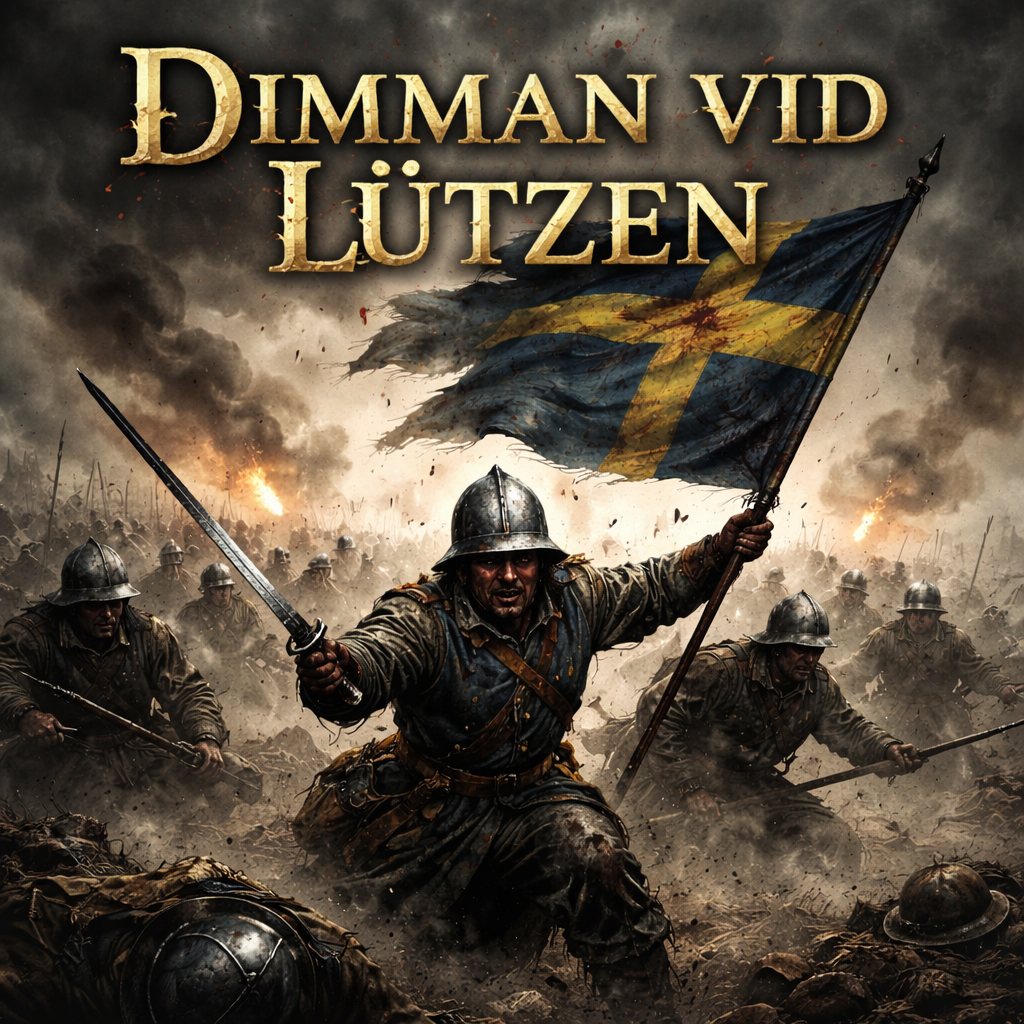
"Dimman vid Lutzen" was born out of a fascination with one of the most pivotal and tragic moments in Swedish history - the Battle of Lutzen in 1632, during the Thirty Years' War.
What drew me in wasn't just the scale of the battle, but the atmosphere surrounding it. Contemporary accounts describe a battlefield swallowed by thick fog, where visibility was reduced to a few meters and units lost contact with each other. Orders became confusion. Formation turned into chaos. And in the middle of it all, ordinary soldiers were left to make impossible decisions.
This song is written from the perspective of one of those soldiers.
Rather than focusing on kings, strategy, or victory, I wanted to capture the human experience: the fear, the loyalty, and the quiet acceptance of death that many must have felt that day. The lyrics reflect a soldier who knows he may not survive, but still chooses to stand his ground - not for glory, but for something deeper: duty, brotherhood, and honor.
A defining moment in the battle - and in Swedish history - was the death of King Gustav II Adolf. He led from the front, as he often did, and disappeared into the fog where he was ultimately killed. That moment is echoed in the song as a turning point: confusion spreading through the ranks, followed by a renewed, almost desperate resolve to keep fighting.
Musically, the goal was to avoid turning the story into a traditional ballad. Instead, I wanted movement - something that feels like marching into the unknown. The arrangement leans on folk-inspired elements such as acoustic guitars, mandolin, and fiddle, but drives them with a relentless rhythm, almost like footsteps in mud. The intention is to place the listener inside the battlefield - not as an observer, but as part of the line.
The chorus is built to feel like a collective voice - something soldiers could have shouted together in the face of fear. It revolves around sacrifice and remembrance: the idea that even if the individual falls, the act of standing firm still matters.
"Dimman vid Lutzen" is not a celebration of war. It's a reflection on what it costs - and what it means to stand when everything tells you to run.